


FileBank helps organizations keep physical and digital records exactly as long as required, and no longer. Our records specialists find records that meet government or organization-based retention rules, list what’s eligible for destruction, and destroy it only after you approve. We also build retention policies, place records on legal hold, and track retention in TotalAccess™.

Retention-as-a-Service is FileBank’s managed retention program. Instead of your staff tracking dates and sorting through boxes and folders, our records specialists apply your retention rules to your physical and digital records, find what’s eligible for destruction and securely destroy it once you approve.
We apply government retention schedules or your organization’s own policies to your physical and digital records.
Stored boxes and digital files are assigned retention dates in TotalAccess.
Our records specialists search your records for anything that has met its destruction rules and create a list for you.
Nothing is destroyed without your sign-off.
Approved paper records are shredded with documented chain of custody, and approved digital files are permanently deleted from TotalAccess.
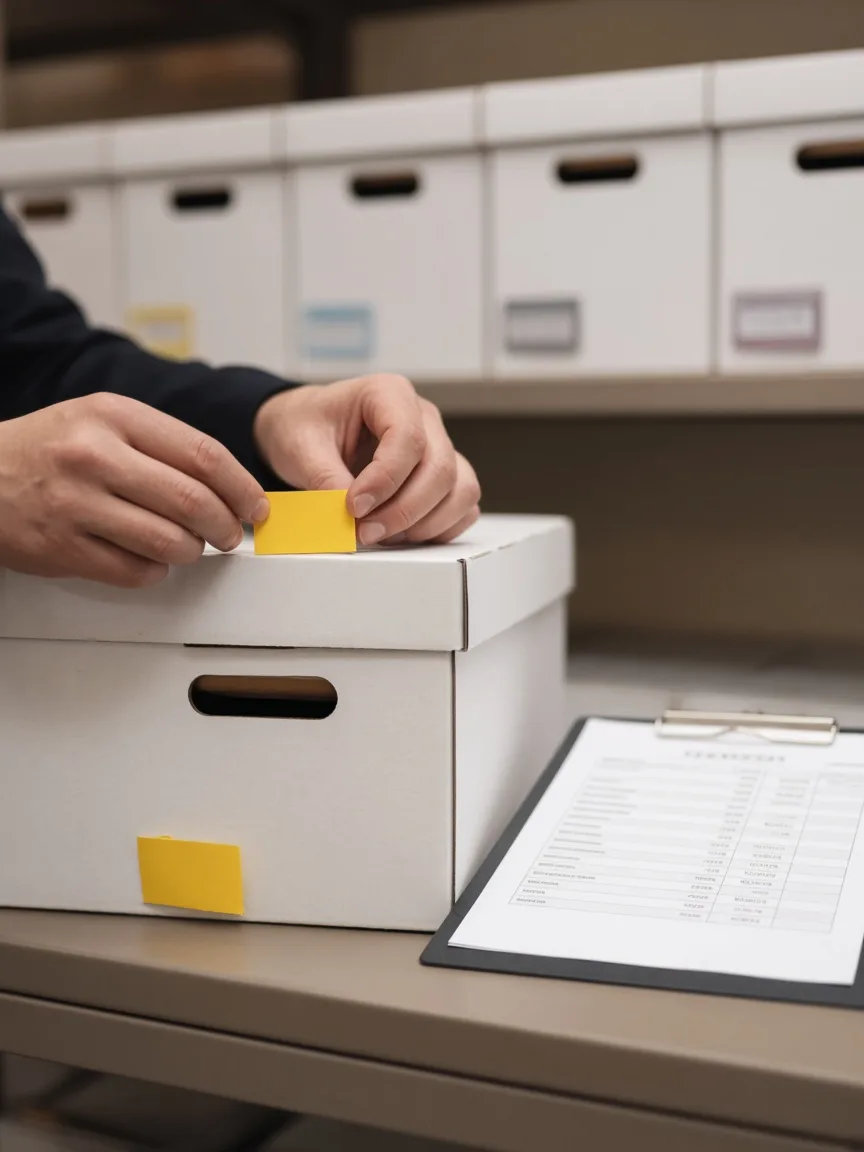
FileBank starts by assessing your current records and reviewing the retention requirements and compliance obligations that apply to you, from HIPAA and FERPA to state records schedules. We then establish custom, compliance-aligned retention schedules and destruction protocols for your paper and digital records that align with your operational requirements and legal and regulatory mandates. Periodic reviews and audits keep your program current as compliance requirements evolve. Every retention strategy is tailored to your organization’s needs and scales with you.
A records retention schedule lists each type of record your organization keeps and how long it must be kept before it can be destroyed. Schedules are based on federal and state laws, industry regulations and your own business needs. In most cases, the retention period depends on what a record contains, not whether it’s on paper or digital. Following a schedule keeps you compliant, lowers storage costs and reduces the risk of keeping sensitive information longer than necessary.
Usually, because a record’s retention period is based on what it contains, not its format. But paper and digital copies don’t always follow the same timeline. Once paper records are scanned, the originals can often be destroyed sooner, while the digital copy is kept for the full retention period. Some records must still be kept in their original form, and public agencies may need state approval before they destroy scanned originals. FileBank helps you sort out which rules apply to each record, so paper isn’t kept longer than needed and nothing is destroyed too soon.
For New Jersey public agencies, we also help you through the state’s records disposal approval process.
TotalAccess shows your stored boxes and digital files together. Every stored box with a retention date appears in TotalAccess, sorted by the soonest due, so you can see what’s coming up and request retrieval or destruction anytime. Flexible retention schedules and detailed tracking and reporting keep every record audit-ready.
Retention rules can be applied to digital files in TotalAccess. Files that reach their retention date are flagged for your review and permanently deleted only after you approve. Every action is recorded in audit logs, so you have a record of what was destroyed and when.
A legal hold, also called a litigation hold, is a requirement to preserve records that may be relevant to a lawsuit, audit or investigation. While a hold is in place, those records can’t be altered or destroyed, even if their retention period has ended, and the hold stays until your legal counsel lifts it.
FileBank can place legal holds on physical and digital records. Held boxes in The Vault® and held files in TotalAccess are left out of retention reviews and destruction until you lift the hold. Stored boxes stay in our access-controlled facility. In TotalAccess, role-based permissions control who can access held files, and every action is recorded in audit logs.
Your paper records are protected in The Vault®, our access-controlled records facility. Digital records are securely retained in TotalAccess with Vault-level protection, role-based permissions and backups in two different states, ensuring long-term accessibility. When a record’s retention period ends, we work with you on review and destruction.
We’ll assess your physical and digital records and your retention requirements, then recommend a plan to keep what you need and securely destroy what you don’t.
Retention periods depend on your state, industry, and record type, ranging from a few years to permanently. Check your state’s records retention schedule or legal counsel. FileBank applies those rules to your records.
A retention policy sets your organization’s overall rules for keeping and destroying records, including who’s responsible and how destruction is approved. A retention schedule is the detailed list of each record type and how long it must be kept. FileBank helps you build both.